
Last updated November 20, 2026
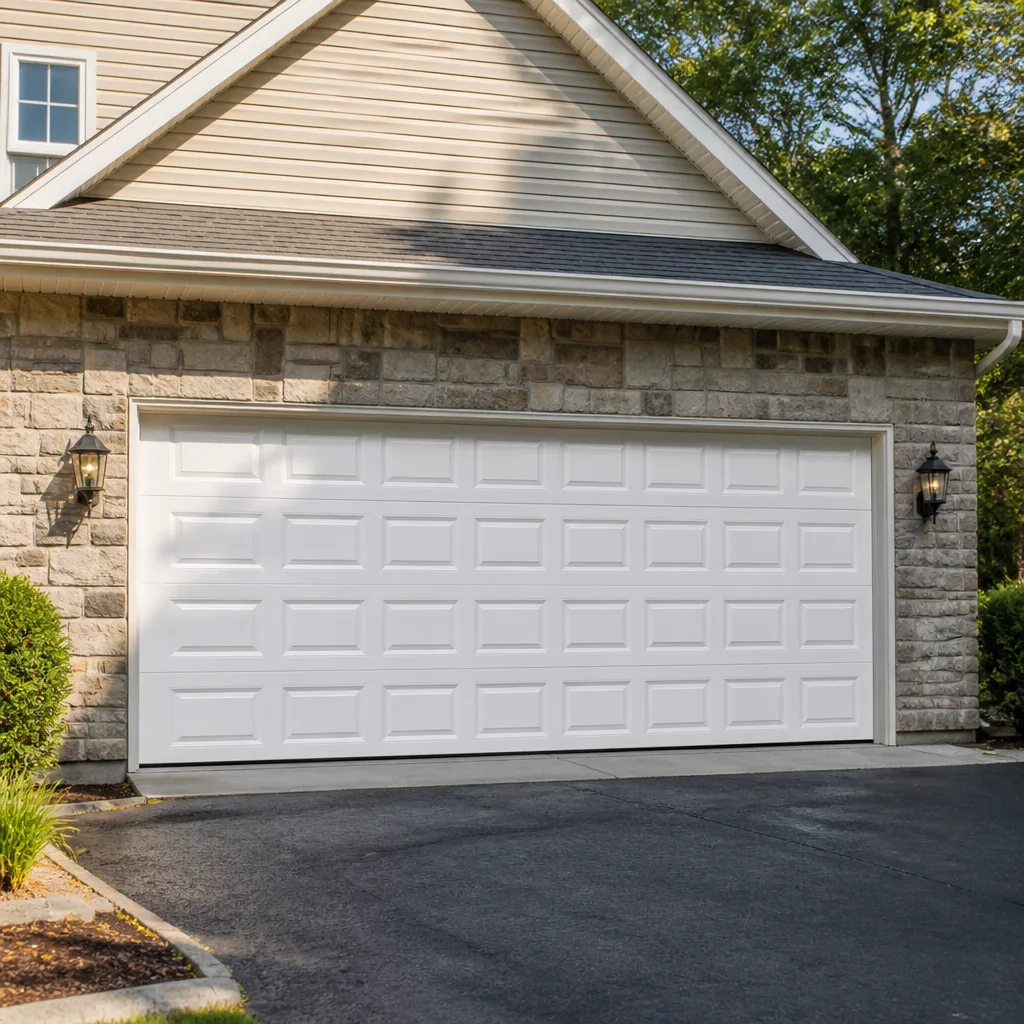 Raised-panel steel
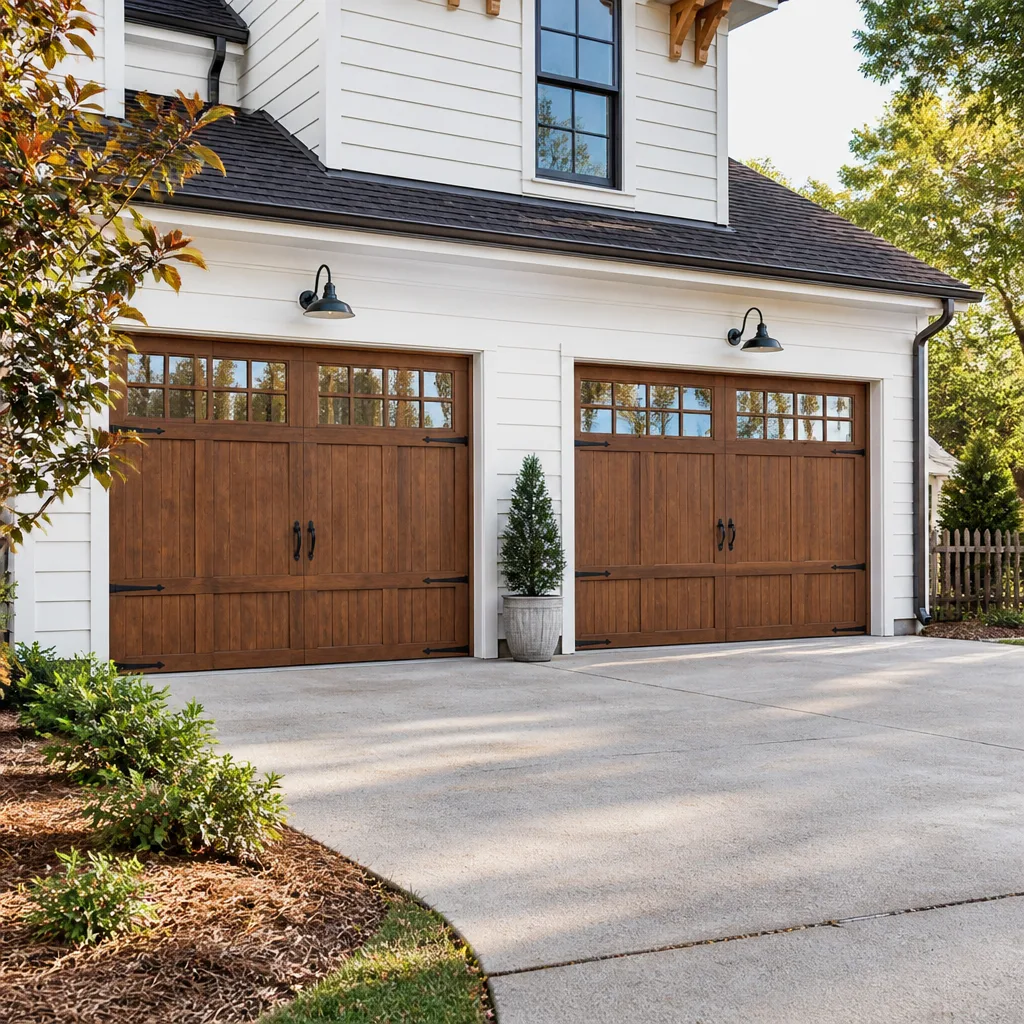 Carriage house
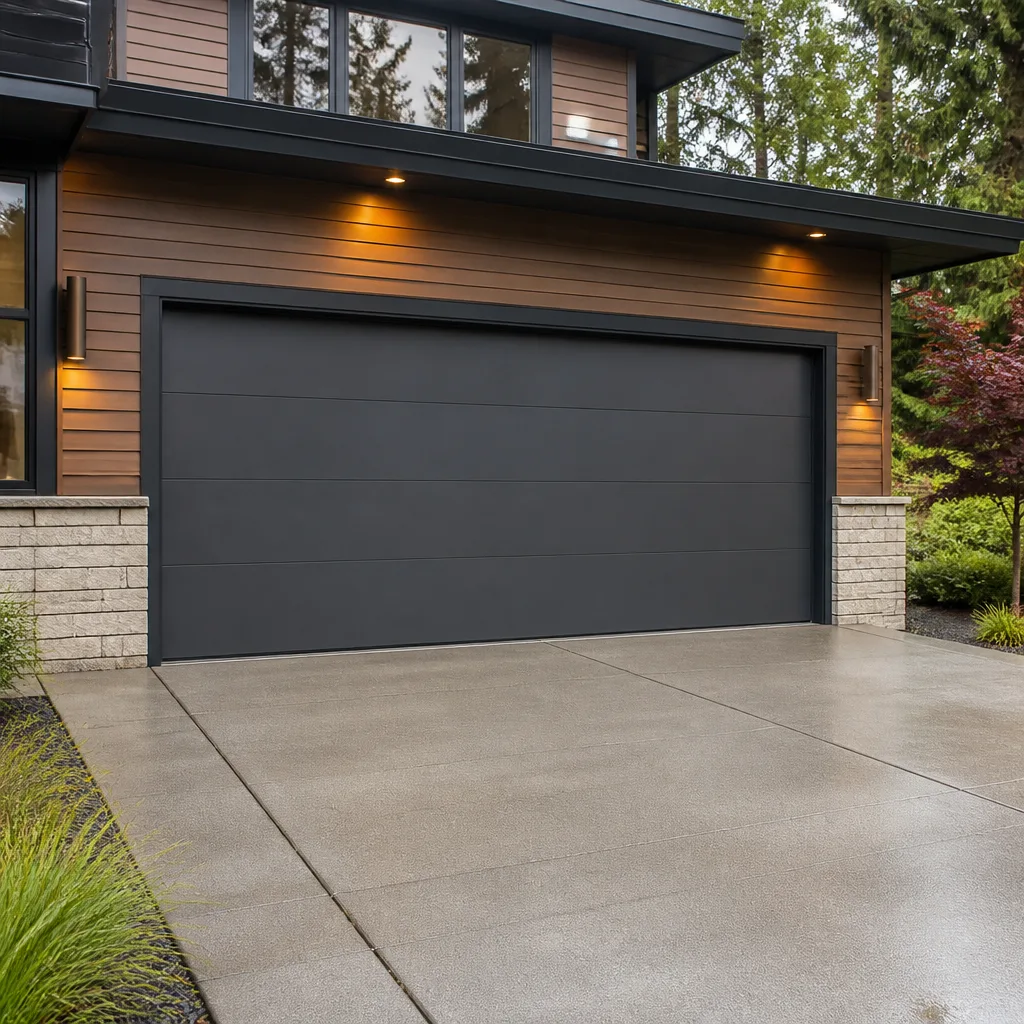 Modern flush
 Full-view glass
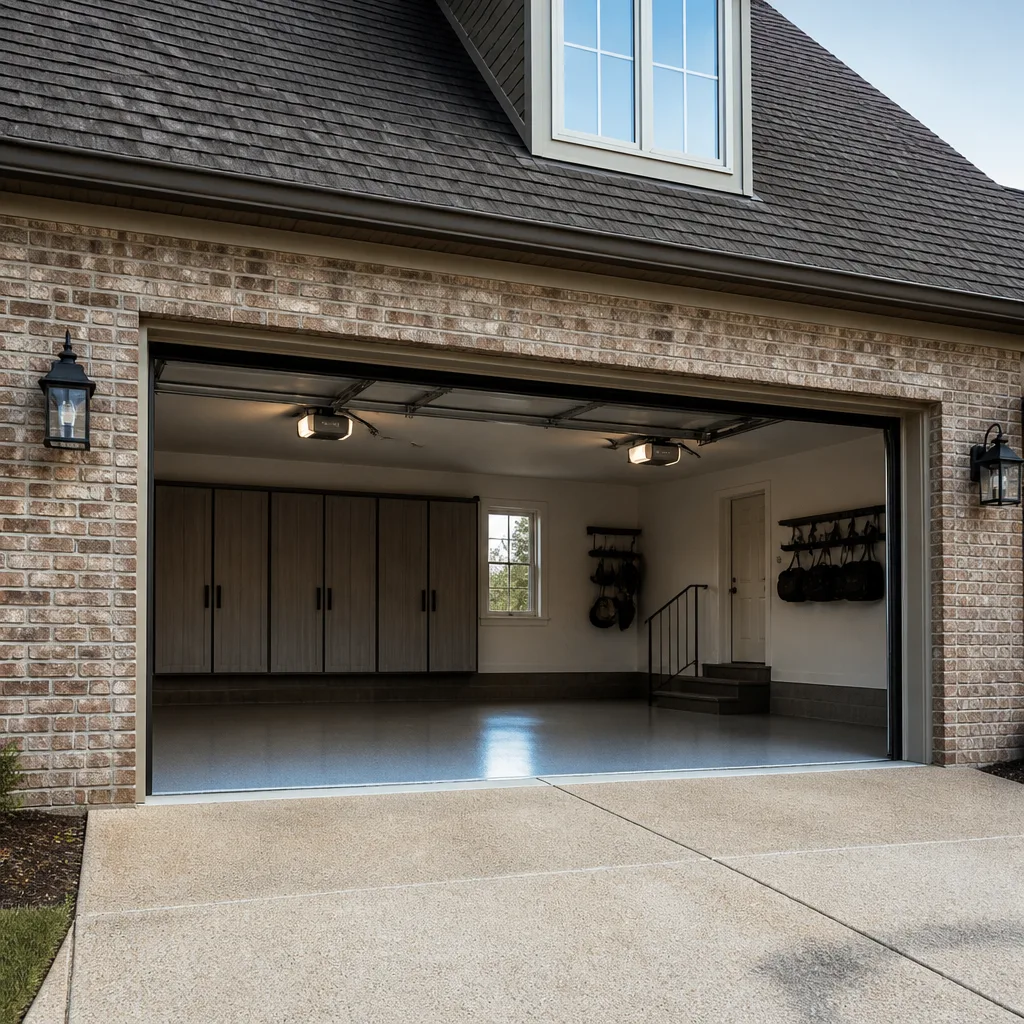 LiftMaster openers
 Chamberlain openers
Full 25-point door and opener safety check with every visit - springs, cables, rollers, tracks, and your LiftMaster or Chamberlain opener included
You get a price before we start. It does not change when the pro arrives.
Get your free estimateGarage Door Warning Signs: A Nokomis Homeowner’s Reference Guide
A garage door that hesitates for two seconds before it moves isn’t quirky. It’s showing you exactly where the failure will happen, and on most doors that failure lands within 30 to 60 days. Here’s the misconception we run into most: homeowners read a grinding noise as “the door’s just getting old,” or a slow open as “that’s the cold.” Both readings are wrong, and both push a small, cheap fix toward a snapped spring or a dead opener. This guide is a reference you can come back to in any season. You’ll learn how to read what each sound means, what uneven travel is telling you, which checks you can safely do yourself, and which parts should never be touched without training. We’ve spent years diagnosing exactly these symptoms on doors across Nokomis, and we’ve written it all down here in one place.
Quick Answer
The main garage door warning signs are a door that hesitates or stalls before moving, a loud pop from above the door, grinding, squealing or scraping sounds during travel, a door that drifts down unevenly or reverses before it hits the floor, frayed or rusted cables, worn rollers, and opener lights or remotes that behave inconsistently. In Nokomis, the cold months hide most of these because a stiff door moves slowly anyway, which is why symptoms tend to surface all at once in March. Any warning sign that involves spring tension or a cable should mean a call to a trained technician, not a weekend project.
Styles & brands we work with
- Raised-panel steel
- Carriage house
- Modern flush
- Full-view glass
- LiftMaster openers
- Chamberlain openers
Table of Contents
- What the Sound Is Telling You: Scraping, Grinding, Popping and Squealing
- Movement Signals: Slow, Uneven, and Reversing Doors
- Visual Inspection: Rust, Fraying and Roller Wear in Early and Late Stages
- Why Nokomis Winters Mask Warning Signs
- What You Can Safely Check Yourself
- The Signs That Mean Stop and Call a Professional
- Opener Warning Signs You Shouldn’t Ignore
- How Warning Signs Turn Into Emergencies
What the Sound Is Telling You: Scraping, Grinding, Popping and Squealing
A garage door is a small machine with several distinct parts, and each one fails with its own noise. Learning to separate those noises is the single most useful skill in this whole guide. Grinding is the least urgent of the four and usually the cheapest to fix. Popping is the most urgent. Here’s how we break them down:
- Scraping. A scraping sound usually means the door panel is rubbing against the frame, or the bottom seal is dragging on the floor as it travels. It’s often a sign the door has shifted slightly out of alignment on its tracks, or that the tracks themselves have been pushed out of line. Left alone, scraping will wear through the paint on the frame and start eating into the bottom weather seal, so it’s worth addressing before winter.
- Grinding. Grinding points at the moving parts: worn rollers, a dry or failing bearing in a hinge, or a torsion shaft that needs attention. It’s a sound of metal on metal, and it tends to build up gradually. Grinding isn’t usually an emergency, but it accelerates wear on the parts around it, so it’s the kind of thing to get looked at before it turns into something bigger.
- Popping. A single loud pop from above the door means a spring has failed or is failing. On a torsion system, the pop happens when the spring breaks, and it can be startlingly loud. Treat this one as a stop sign. Don’t try to open the door again until a technician has seen it, because the door’s own weight is now being carried by the opener or by nothing at all.
- Squealing. Squealing comes from a high-friction point, usually a roller or a hinge running dry. Sometimes it’s a simple lubrication issue, but sometimes it’s a bearing that has started to seize. If a quick application of the right lubricant silences it, fine. If it comes back within days, the part is on its way out.
If your door is making any of these sounds and you can’t place which one, describe it to us when you call. That single detail often tells us more about the job than anything else. We handle garage door repair across the eight brands we work on, including LiftMaster and Chamberlain openers and the doors and hardware of Raynor, Genie, Clopay, Amarr, Wayne Dalton and Craftsman systems. Knowing the brand often narrows down which part is complaining.
Movement Signals: Slow, Uneven, and Reversing Doors
How a door moves is as revealing as how it sounds. A healthy garage door opens and closes at a consistent, steady pace with a smooth start and stop. When it starts to hesitate, lurch, or reverse before touching the floor, you’re watching a mechanical problem play out in slow motion.
- A two-second hesitation before moving. This is the most common opening sign we see. When a door pauses before it responds to the opener, the cause is usually a worn or failing spring, or an opener that’s straining against a door that has gotten heavier. Springs lose tension over time, and the opener has to work harder to lift a door the springs no longer help with. That hesitation is the sound of the opener complaining.
- Slow descent. If the door slows noticeably on the way down, or the opener sounds labored during travel, the door’s balance has changed. In cold weather, a slow door is normal up to a point. In mild weather it’s a sign the spring assembly is tired.
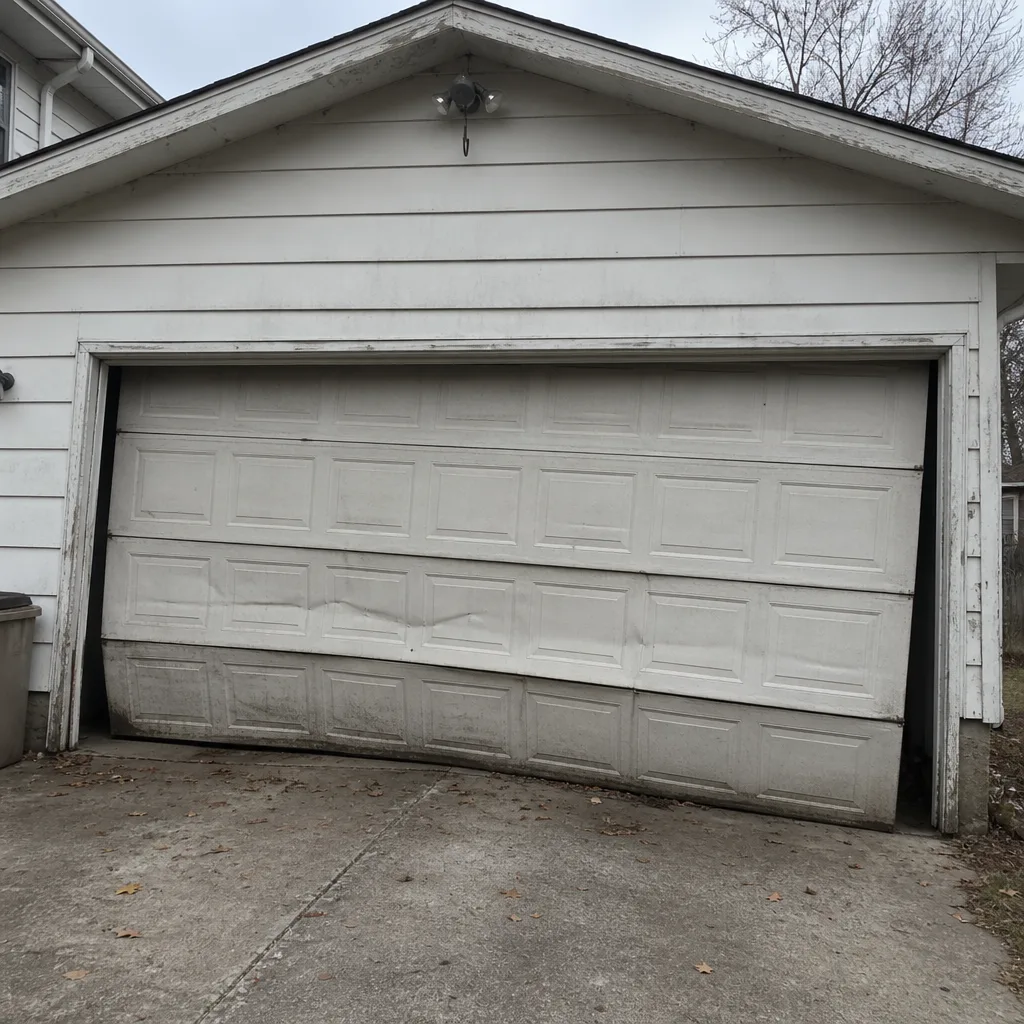
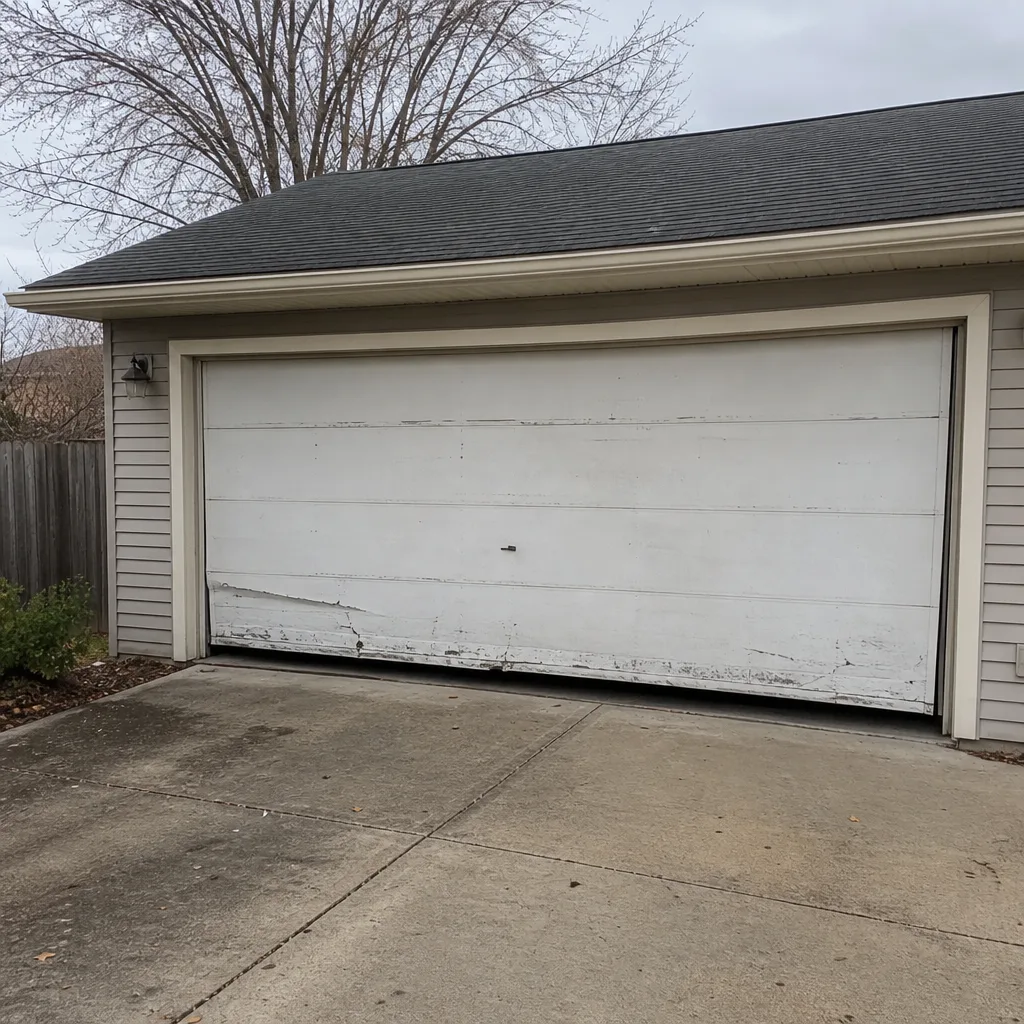
- Uneven travel. A door that dips on one side, tilts as it goes up, or comes down at an angle is telling you something is unequal in the system. It could be a cable that has slipped a drum, a single failed spring on a two-spring system, or tracks that are out of alignment. Using the door in this state puts extra stress on the opener and on the panels themselves, so stop using it until it’s looked at.
- Reversing before it touches the floor. A door that reverses on its own before reaching the ground usually has an alignment issue, an obstruction in the photo-eye line, or a limit switch on the opener that’s drifted out of adjustment. On some doors it’s a symptom of a bent bottom rail. Whatever the cause, a door that won’t stay down is a security problem as much as a mechanical one, especially with the door used as a main entrance to the home.
- One-blade-at-a-time movement. A door that moves in jerks or stops partway up and stays there is seeing the opener struggle against something it can’t overcome. If a door stalls halfway, stop pressing the button and stop pulling on it. That’s a call-a-technician moment.
Balance is the key word in all of this. A well-balanced garage door should hold its position about halfway up when you disconnect the opener, and it shouldn’t fight you. If yours won’t do that, the spring system is the likely culprit. Spring work is high-tension work, and we’ll get to the safety side of that in a moment.
Visual Inspection: Rust, Fraying and Roller Wear in Early and Late Stages
Some garage door problems are visible before they’re audible, and a two-minute look at the right parts can catch something that would otherwise become an emergency. This is the safest kind of check you can do yourself, because it only requires your eyes, not your hands. Here’s what to look for and how the early stages differ from the late ones.
- Rust on the tracks and hinges. Early rust looks like a fine, powdery brown film at the joints between hinge plates and along the inside of the track. It’s cosmetic at that stage. Late-stage rust has started lifting the paint and pitting the metal, and the moving joints have begun to seize. Rust on the inside of a track also creates drag, which is where a lot of grinding noise comes from.
- Cable fraying. Early-stage cable wear shows as a few broken strands near the drum at the top of the door, or at the loop where the cable attaches to the bottom bracket. Late-stage wear is a visibly frayed, bird-caged cable with strands sticking out, or a cable that has slipped its drum. A frayed cable is a safety issue and should be treated like one.
- Roller wear. Rollers come in two basic flavors: steel and nylon. A healthy roller on either type has a clean, round shape with no visible flat spots. Early wear shows as a slight flattening on the edge. Late wear shows as deep flat spots, cracks in the nylon, or wobble when you press lightly at the top. Worn rollers are a common source of vibration and grinding, and they wear the track faster once they go flat.
- Spring condition. Look at the coil springs above the door. If you can see a gap in the coil, or the spring looks stretched and sagging compared to where it used to sit, it’s lost tension. A broken spring is usually obvious: the coil separates into two pieces, often with a visible gap. Don’t try to touch or measure it. Just note it and call.
- Weather seal condition. The bottom seal hardens with age and eventually cracks or breaks away. A hardened seal doesn’t seal, which matters in a place with real winters, and it’s a cheap, low-risk replacement once you’ve spotted it.
If your door is a Clopay, Amarr or Raynor model, the panel and hinge construction tends to be fairly consistent, and a visual inspection tells you a lot. If you’re not sure what you’re looking at, take a photo of the door and the mechanism when you call. A photo of the spring and cable area gives us a head start before we’re on site. This matters when you eventually want garage door installation rather than repair, because knowing what’s failing tells us whether the door can be saved or is due for replacement.
Why Nokomis Winters Mask Warning Signs
This is the local piece that catches people out, and it’s worth understanding clearly. Nokomis winters are long and cold enough that a garage door changes its behavior for months at a time. When the mercury drops, lubricants thicken, metal contracts, and springs lose a little of their tension. A door that’s a few months from failure will often move slowly and heavily all winter, and it does this so consistently that you stop noticing. In March, when temperatures come back up and the whole system loosens, the same door suddenly jumps, pops, or stops entirely. Here’s what’s actually happening:
- Cold thickens the grease. The lubricant on your rollers and hinges gets stiffer in cold weather, which drags the door and makes it move slower. That masking effect is real: a slow door in January and February is often a failing roller or a tired spring, not just a cold door.
- Metal contracts. Steel tracks and door frames move slightly with temperature. A track that’s a little out of alignment in summer can bind more in winter, and a hinge that’s wearing can develop a squeal that only shows up in the cold.
- Springs lose their help. Spring tension is altered by temperature, so a spring that’s on its last legs will feel weaker in the dead of winter. The opener works harder to lift the door, and the wear accelerates.
- Snow and ice at the bottom. A thick layer of ice under the bottom seal puts resistance on the door as it closes, and a door that thinks it has hit an obstruction will reverse. This can look like a door reversing for no reason, when it’s reacting to a genuine obstruction.
- The spring-back in March. When the weather warms and everything loosens, the accumulated strain has nowhere to go. Spring failures and cable slips cluster in the first weeks of milder weather.
So the practical lesson for Nokomis homeowners is this: don’t let the cold be your excuse. A door that moves slowly in January should get a look in January, not wait for the spring thaw to reveal the failure. If you’ve noticed a hesitation or a new sound during the winter, write it down. That list is useful when you call. Call (877) 792-5938 and we’ll talk it through. We answer 24/7, and there’s fast dispatch from 7am to 7pm, Sunday through Friday.
What You Can Safely Check Yourself
There’s a real, useful line between the checks a homeowner can do and the checks that belong to a trained technician. The rule of thumb: anything you can look at or listen to from the floor is fair game. Anything that involves reaching into a moving mechanism, disconnecting a door under tension, or touching a spring or cable is not. Here are the checks that are safe to do:
- Listen. Stand in the garage and run the door up and down once. Note every noise you hear and where it seems to come from. Grinding at the tracks, squealing at the hinges, popping above the door: each has a different cause, and noting it precisely helps whoever looks at it.
- Watch the travel. Does the door go up and down evenly? Does it hesitate? Does it tilt? A door that dips on one side is worth a call on its own.
- Test the photo-eye safety. Every modern opener has a pair of small lenses at the bottom of the door track, and blocking one should stop or reverse a closing door. This is a safe, important check, and if it fails, that’s a call.
- Test the manual release once, from a safe position. With the door closed, pull the release handle once and check that you can lift the door a little by hand, then lower it back. If it feels very heavy or fights you, the springs have lost their help, and you should re-engage the door and stop. Don’t do this test if the door is already broken or visibly damaged.
- Check the bottom seal and the panel condition by eye. Look for cracks, gaps, rust, and worn rollers, as described above. Note anything you find.
- Look at the opener’s indicator lights and test the remotes. If remotes work inconsistently or the opener’s light is unresponsive, that’s a sign the electronic side needs attention. That’s also where our garage door opener repair work starts, and it’s often a separate fix from the door mechanism.
Here’s the companion list: the things that are not safe to do yourself. These are
spring replacement and spring adjustment,
cable replacement or re-spooling,
track straightening on a door under load,
anything involving the torsion shaft,
and any attempt to force a door that has stalled partway. The high-tension spring and cable system holds the weight of the whole door. A spring that’s under load can release suddenly, and that’s the kind of injury nobody wants to risk to save a service call. We work on springs every week, and we treat them with respect every time. This is a job for a trained technician, full stop.
The Signs That Mean Stop and Call a Professional
Some warning signs are a “note it and get it looked at” situation. Others are a “stop using the door and call now” situation. The distinction matters because the second list can escalate fast. Here are the signs that mean stop:
- A single loud pop from above the door, followed by the door feeling heavier than before. That’s a spring failure. Stop using the door.
- A door that hangs unevenly or has dropped on one side. That’s a cable or a single spring on a two-spring system. Don’t run the opener against it.
- A visibly frayed or snapped cable. Cables are under tension, and a broken one can whip. Keep clear and call.
- A door that won’t close all the way or reverses before touching the floor. This is a security and weather exposure problem as much as a mechanical one, especially if the garage is your main entry.
- A door that has come off one of its tracks or is binding against a track. Forcing it can bend the panel or damage the track further.
- Any door that has jammed with a vehicle inside. Don’t try to force it open. Get a technician out.
When one of these happens, the goal is simple: get the door back to working and safe, with the right fix and not the most expensive one. That’s the whole point of a specialist. We combine the mechanical hardware (springs, cables, tracks, rollers, panels) and the electronic side (openers), so it’s one call rather than two. And we handle emergency garage door service for exactly this kind of time-sensitive failure. If the door is stuck open, or won’t secure, that’s the call. We answer 24/7. A call outside dispatch hours is booked into the next opening, Sunday through Friday, 7am to 7pm.
Opener Warning Signs You Shouldn’t Ignore
The door gets all the attention, but the opener has its own warning signs, and they’re just as worth reading. Here’s what each one usually means:
- The opener strains or sounds labored as it lifts the door. Most often the door has gotten heavier (the springs have lost tension) and the opener is compensating. Fixing the door fixes the opener’s workload.
- Remotes work inconsistently. Sometimes that’s a battery, sometimes it’s interference, sometimes it’s a failing receiver board. If a new battery doesn’t fix it, it’s worth a diagnostic.
- The opener light flickers or stays on. Lights that don’t behave as expected can signal a logic board issue or a limit-switch problem. On a LiftMaster or Chamberlain unit, the diagnostic light codes can tell a technician a lot, so note what you see.
- The door only opens with the wall button, not the remote. That’s a receiver or signal problem, not a door problem. It’s a fix on the opener side.
- The opener runs but the door doesn’t move. That’s often a stripped gear, a broken chain or belt, or the door’s manual release left disengaged. It’s a diagnostic job, and on a Genie or Craftsman unit, the fix is usually straightforward.
- The opener is much older than the rest of the system. A tired opener on a door that’s still in good repair is a common combination. Sometimes the right answer is replacing the opener and keeping the door, and sometimes it’s the reverse.
We’re fluent across the eight brands that make up most of the market, including Raynor, LiftMaster, Chamberlain and Genie, so “we don’t service that brand” isn’t the end of the conversation. It’s a diagnostic, and it’s the same diagnostic whether it’s a door problem or an opener problem. One call covers the whole door. If you want a free estimate, call (877) 792-5938.
How Warning Signs Turn Into Emergencies
The reason a warning-sign reference guide is worth keeping is that the window between “small problem” and “emergency” is wider than most people realize, and it’s entirely predictable. Understanding the timeline is how you get out ahead of it. Based on what we see on jobs, here’s roughly how it plays out:
- The early stage (days to weeks). A new squeal, a little grinding, a slight hesitation. The door still works, so nothing gets done. This is the cheapest point to fix, because it’s usually lubrication, a roller, or a hinge.
- The middle stage (weeks to 30-60 days). The hesitation becomes consistent. The door slows on the way down. The opener sounds labored. The warning sign is now telling you the spring assembly is tired or a part is failing. Still a repair, still not an emergency, but no longer a small one.
- The failure point. The spring pops, the cable slips, the opener’s gear strips, or the door jams. Now it’s a repair plus the security and access cost of a door you can’t use, and it can happen at the worst possible moment.
- The emergency. The door is stuck open, or won’t secure, or a car is trapped inside. This is where emergency service is the right call, and where we’re set up to help.
In Nokomis, that timeline has a local wrinkle: the winter masks stages one and two, and the spring thaw compresses them into a few weeks. That’s why we tell people to treat any little symptom they noticed in the cold months as still live in March. If you can’t remember exactly when a noise started, tell us that too. The timing is part of the diagnosis.
One more thing that’s worth saying plainly: the price is quoted and agreed before any work starts. There’s no scenario where we start the job and hand you a different number afterward. The written estimate is the price. And it’s free to get one. Call (877) 792-5938 for a free estimate. We answer 24/7, with fast dispatch from 7am to 7pm, Sunday through Friday.
Common Mistakes to Avoid
- Chalking a hesitation up to “it’s just cold.” In Nokomis, the cold genuinely does slow a door down, but that’s exactly what hides a failing spring. If the door hesitates in mild weather too, don’t blame the temperature.
- Forcing a door that’s stalled partway. Pulling on a stuck door can bend the panels, snap a cable, or burn out the opener. Stop and call.
- Ignoring a single pop from above the door. A pop means a spring has failed. Running the opener afterward means the opener is now lifting the door’s full weight, and that’s how a cheap spring repair becomes a spring-and-opener repair.
- Replacing the opener when the door is the problem. If the door has gotten heavy, a new opener will labor too. Diagnose the door first.
- Assuming a brand isn’t serviceable. Eight major brands is a wide net, so “we don’t service that” is rarely the answer. Call and ask.
- Treating cable fraying as cosmetic. A frayed cable is a safety issue. It’s one of the few things on this list that should always mean a call.
- Letting a March list of small noises wait until next winter. Everything you noticed in the cold months is worth mentioning in one call. It’s the same diagnosis, just earlier.
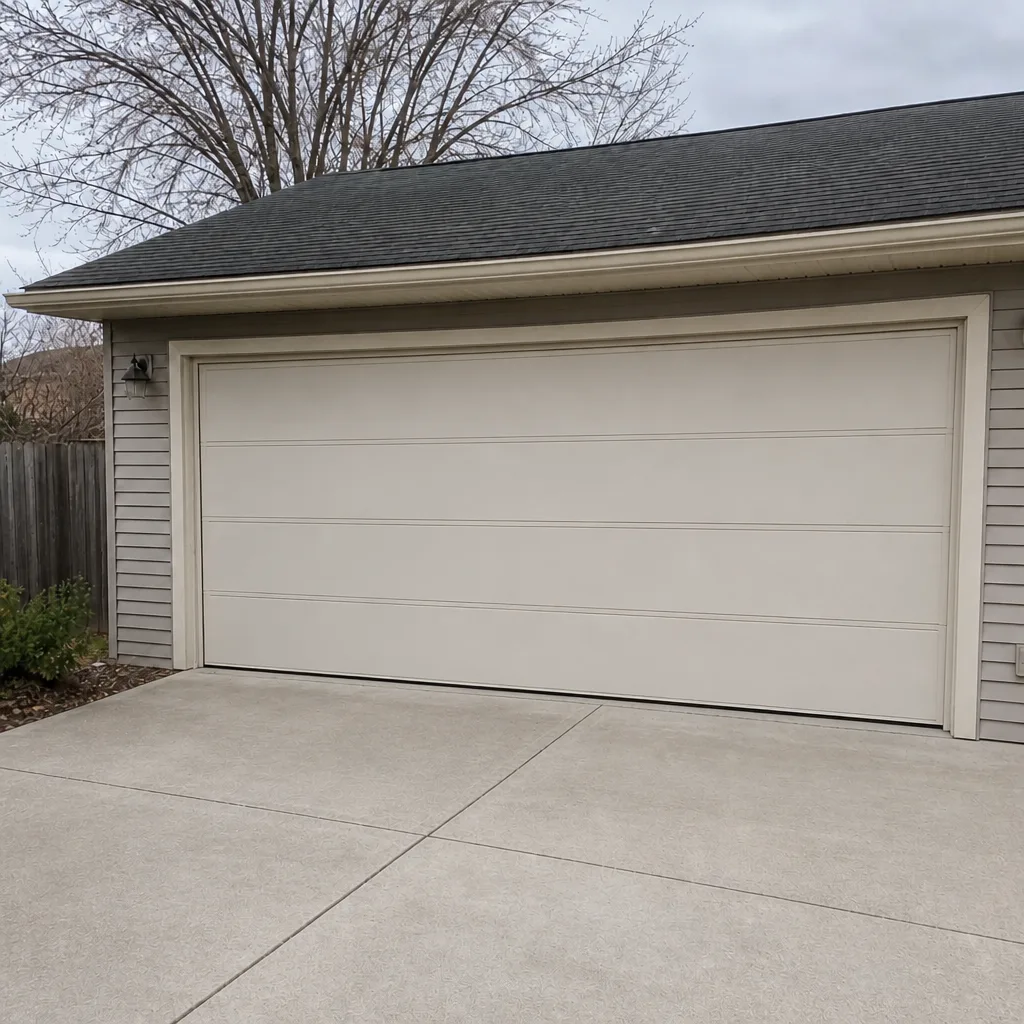
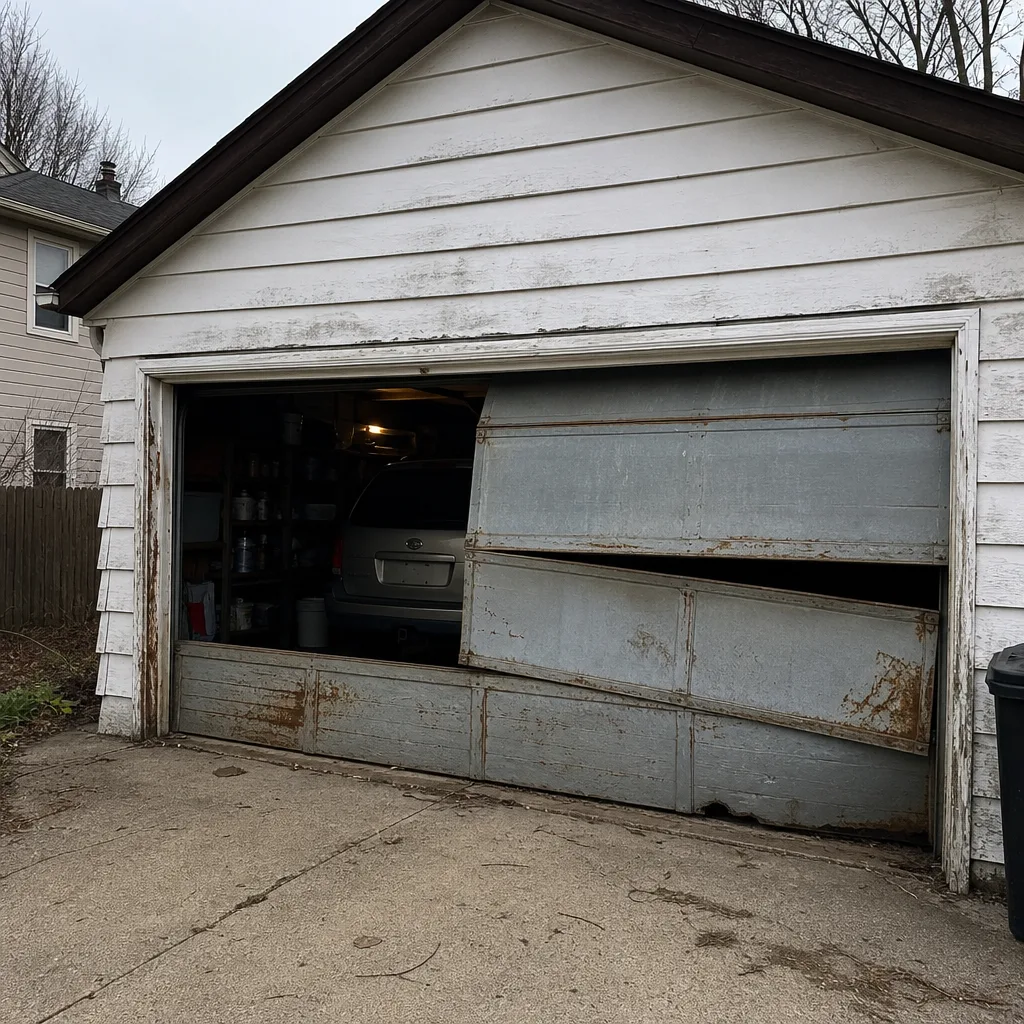
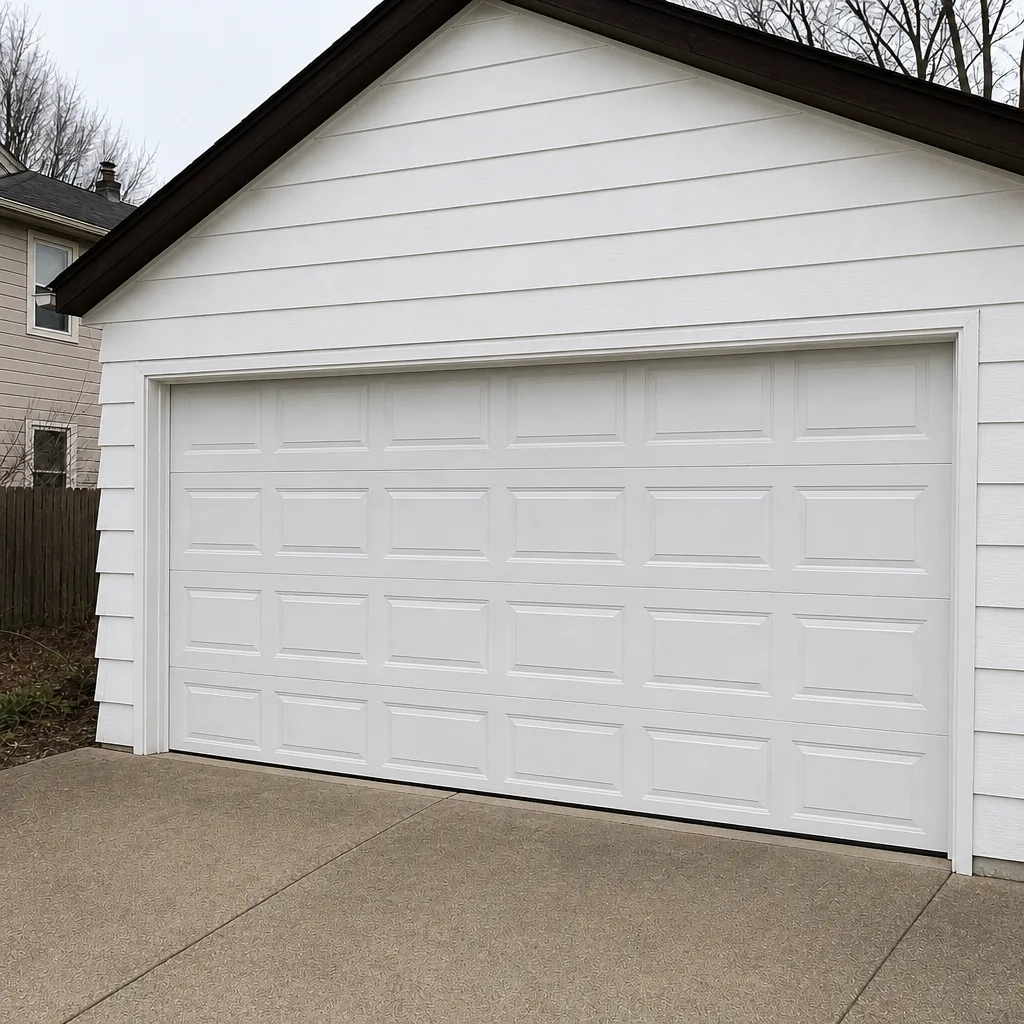
See the difference
 Before
 After
 Before
 After
 Before
 After
When to Call a Professional
Call a professional when the warning sign involves a spring, a cable, a track under load, or a door that’s stuck, uneven, or won’t secure. Call when a single pop from above the door has changed how the door feels. Call when the opener strains, when remotes work inconsistently and a battery doesn’t fix it, or when a door has stalled partway. And call if you’re simply not sure what you’re looking at, because a bad diagnosis is more expensive than a good one. Garage Door Repair Nokomis offers free estimates in Nokomis. We work on the eight major brands, we handle both the door and the opener, and we handle emergency garage door service when a failure can’t wait. Call (877) 792-5938. We answer 24/7, with fast dispatch from 7am to 7pm, Sunday through Friday.
Frequently Asked Questions
The most common warning signs in Nokomis are a hesitation before the door moves, a grinding or squealing sound during travel, a door that slows or dips on one side, and an opener that sounds labored. In this climate, the cold months hide these symptoms, so a lot of Nokomis homeowners first notice them in March. Any sign involving a spring or cable should mean a call to a trained technician. Call (877) 792-5938 for an exact quote on a repair, and estimates are free.
Most garage doors give useful service for a long time before they need replacing, and the deciding factor is usually whether the structure and panels are still sound. Rust on the tracks, cracks in the panels, and repeated spring or cable failures on the same door are the signs that repair is no longer the better money. A door that’s otherwise in good shape is usually worth repairing. If you’re not sure which side yours falls on, we’ll tell you honestly when we’re on site.
No, spring replacement is not a safe do-it-yourself job. Torsion and extension springs are under very high tension, and a sudden release can cause serious injury. The good news is that spring repair is a core part of what we do, not a job we avoid, so this is one of the few things on the door that’s genuinely best left to a trained technician. Call (877) 792-5938 for a free estimate on spring repair.
A hesitation before opening usually means the door is heavier than the opener expects, most often because the springs have lost tension and the opener is making up the difference. It can also be a failing opener gear or a weak capacitor. That hesitation is the warning sign most likely to predict a failure within a month or two. Call (877) 792-5938 for a free estimate and we’ll tell you exactly where it’s coming from.
No. The price is quoted and agreed before any work starts, and the written estimate sets the price. If the diagnosis is different from what was expected, we tell you before doing anything and update the estimate first. The goal is the right fix, not the most expensive one, and that starts with a price you’ve agreed to. Call (877) 792-5938 for a free estimate.
The local pro we connect you with is licensed and insured as their state requires, and our technicians have up to 13 years of experience. Same-day service is available for repairs and emergency failures. Call (877) 792-5938. We answer 24/7, with fast dispatch from 7am to 7pm, Sunday through Friday.
If the door has popped and won’t move, stop pressing the opener and keep clear of the springs and cables. A pop usually means a spring has failed, and the door’s weight is now on the opener or the tracks. Start with garage door repair in Nokomis and we’ll come out and assess it. Call (877) 792-5938. We answer 24/7, and a call outside dispatch hours is booked into the next opening, Sunday through Friday, 7am to 7pm.
The Bottom Line
Garage door warning signs are a language, and learning to read them is the cheapest maintenance you’ll ever do. A hesitation, a new grinding sound, a door that dips on one side, a frayed cable, worn rollers, an opener that strains: each one points at a specific part and a specific timeline, and the window before a failure is usually 30 to 60 days. In Nokomis, the winter hides the early warning signs and the spring thaw compresses the timeline, so what you noticed in the cold months is still worth acting on now. Do the safe checks yourself. Leave the springs and cables to a trained technician. And when in doubt, call.
Call (877) 792-5938 for a free estimate. We answer 24/7, with fast dispatch from 7am to 7pm, Sunday through Friday.
Written by the team at Garage Door Repair Nokomis.